

One small everyday object can turn out to be far more dangerous than you might think at first glance. They can probably be found in every home. We are talking about used batteries and accumulators. In 2023, a total of 291 tonnes of old batteries and accumulators were collected, and last year it was already a tonne more. Every year, 600 tonnes of them are placed on the market. Where does the rest go, and what dangers can arise when batteries and accumulators do not reach the right collection point?
Big accidents begin with a small object
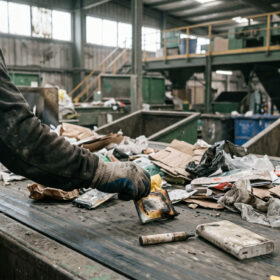
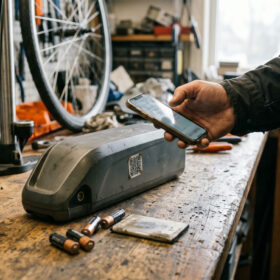
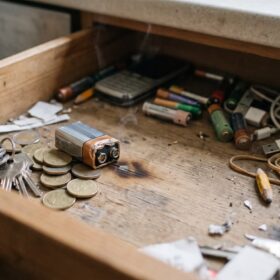
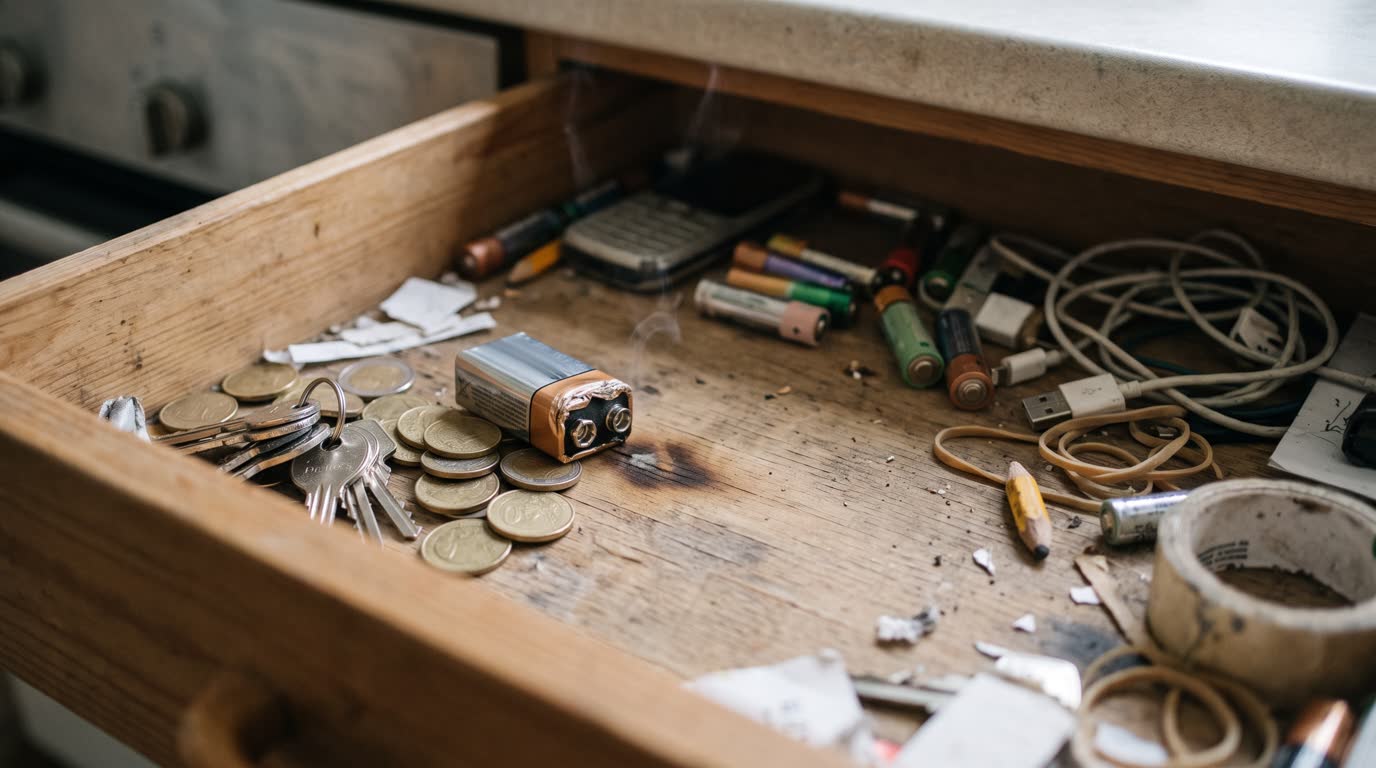
No doubt they lie at the bottom of drawers at home, in basement cupboards or in garages among old things. Some also end up in household waste. That is not how it should be! An old battery that is stored incorrectly, or a damaged rechargeable battery, can catch fire. It is enough for the terminals of batteries to touch, for example, keys or coins in a drawer: a short circuit occurs and the battery may well catch fire. When they end up in household waste, old accumulators and batteries cause fires in waste collection trucks or at waste management sites every week. If a rechargeable battery takes a hard knock, is damaged or is charged incorrectly, it can overheat and catch fire. Particular care is needed with lithium-ion batteries, which are found in phones, wireless headphones and cordless power tools.
Avoid foolish risks
New European Union requirements place greater responsibility than before on both producers and waste management companies, but the simplest and most important thing remains up to each person: a used battery or accumulator must be collected separately from other waste. The easiest way is to take them to the battery collection boxes in shops or to a waste station. If a battery or rechargeable battery can easily be removed from a device, it is worth taking it out and bringing it separately to a battery collection point, and the electronic device to an e-waste collection point. If the battery is built into the device, it must not be removed by force; in that case the whole device must be taken for collection. Collection boxes for small electronics are located at the entrances of many shopping centres. Large electronic devices must be taken to a waste station.
The crossed-out wheeled bin symbol is a warning
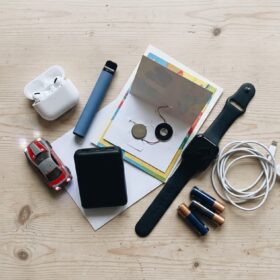
Batteries and accumulators are found in phones and tools, but more and more often also in toys, headphones, lamps, toothbrushes, kitchen appliances and dozens of other small everyday items. Particularly tricky are small rechargeable batteries that people may not even recognise as batteries. While an old phone or a cordless drill obviously seems like electronics, a flashing toy, a wireless earbud, a small fan or an electric toothbrush unfortunately ends up in the mixed municipal waste container quite easily.
The rule of thumb could be very simple: if an item makes a sound or has lights on it, it may run on a battery or accumulator and therefore does not belong in mixed municipal waste.
Since 18 August 2025, the European Union Battery Regulation has required batteries and accumulators to carry the crossed-out wheeled bin symbol, which sends a clear message: they must be collected separately and taken to a battery collection box. From February next year, batteries will also carry a QR code that gives, among other things, information about the battery’s capacity.
We send batteries for an X-ray
If the risk of fire is not yet a convincing enough reason to collect batteries separately, it is also worth remembering that batteries and accumulators contain valuable materials that can be used again. For example, a large share of the batteries collected are alkaline batteries, and processing them recovers, among other things, steel, zinc, materials containing manganese, and copper. To do this, batteries with different chemical compositions must first be separated from one another. A new battery sorting line is also planned for Estonia, where X-ray technology will be used to identify the composition of batteries. This makes it possible to sort the batteries before they are sent on for further processing.
This reduces the need to mine ever more new raw materials and conserves natural resources. That is one of the principles of the circular economy: at the end of its useful life, material does not become waste but gets the chance to return to production. For that, however, the battery has to reach the right collection point, not the household waste bin or the bottom of a drawer.
Kaur Kuurme
Member of the Management Board of Eesti Elektroonikaromu
The article was published in Võrumaa Teataja on 23 October 2026. Translated from Estonian.
- Battery fires caused 2.66 billion euros of damage to the EU waste sector

- Every battery gets a QR code in 2027, but only large batteries get a battery passport
- Small electronics – 13 surprising items that must not go into mixed municipal waste
- Liisu Miller shows in a video where to take old chargers and cables
- Water-damaged devices: what to do after a flood?
- A household danger that can start fires and fits in the palm of your hand