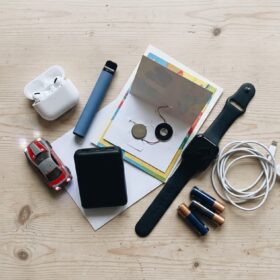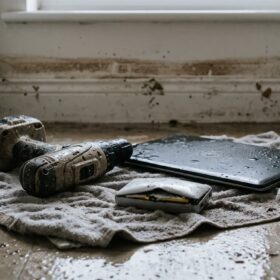


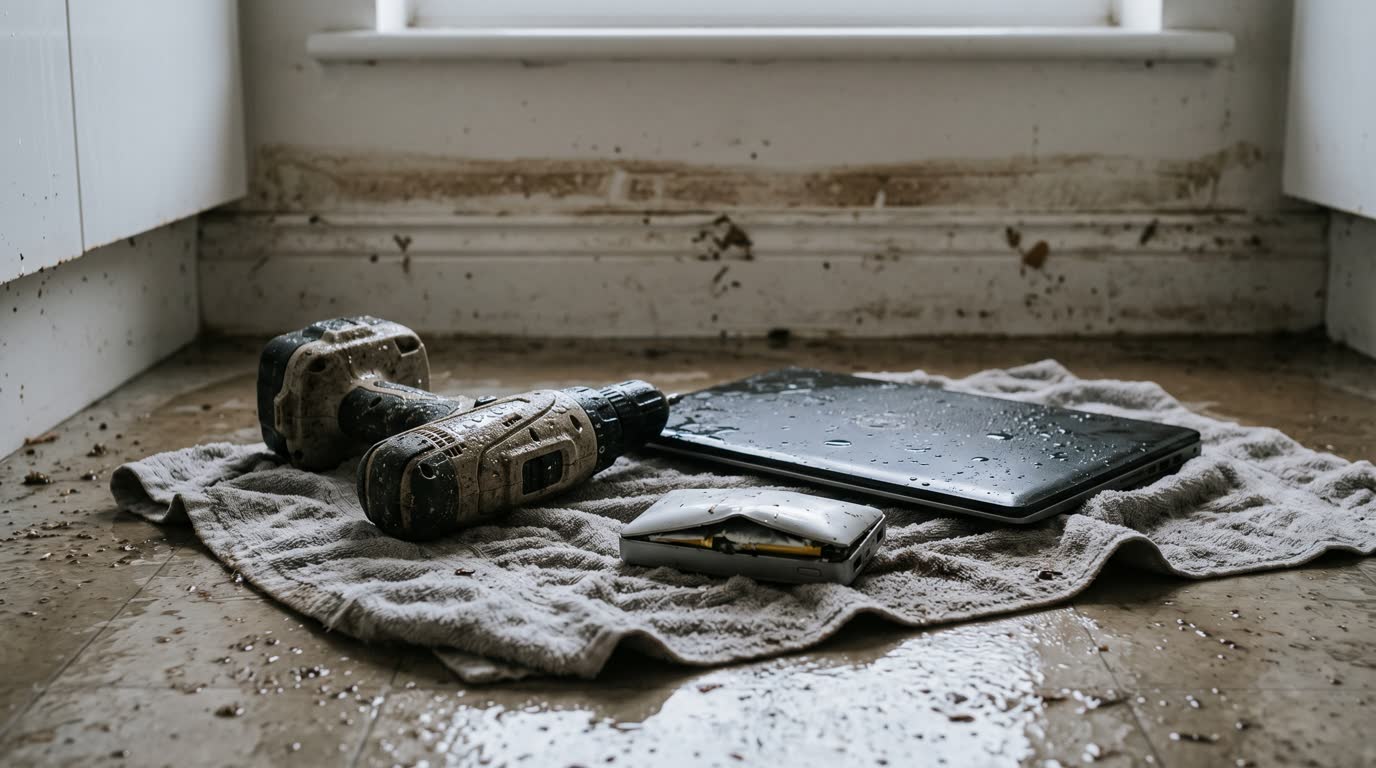
Water-damaged devices may not be safe even if they start working again after drying out. With electrical devices that have been through a flood or other water damage, the damage may not be visible to the eye, and problems may only appear later. Eesti Elektroonikaromu recommends taking battery-powered devices that have been in contact with floodwater to a waste station and having other water-damaged electronics checked by a specialist before using them again.
In this article:
Why are water-damaged devices not safe even after drying?
Where to take water-damaged devices?
Find your nearest collection point for water-damaged devices
Reading time: 4 minutes.
Why are water-damaged devices not safe even after drying?
“With water damage, you cannot go only by whether the device works after it has dried. Water can get inside the device and cause damage that only shows itself later. You need to be especially careful with devices that contain a battery: if a battery-powered device has been in floodwater, you should certainly not put it on charge, not even to test it,” said Kaur Kuurme, member of the management board of Eesti Elektroonikaromu.
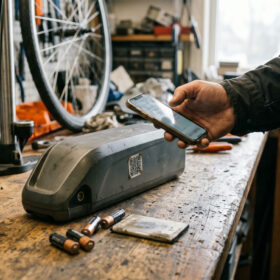
According to Kuurme, the danger of a water-damaged lithium battery may not be visible from the outside, because water and moisture can damage the battery and its electronics and cause short circuits. A reaction may not occur immediately after contact with water, which means that a battery that looks calm on the surface can become dangerous later. For this reason, battery-powered devices such as drills and other cordless power tools, laptops, power banks, electric toys, robot vacuum cleaners, and e-bikes and e-scooters should be treated as damaged devices after any kind of water damage.
Floodwater is even more problematic than ordinary water, because it can contain salts, dirt, chemicals and other contaminants that remain in the device even after the water has evaporated. Water can cause short circuits, damage insulation and start corrosion, so “it dried out and started working” does not mean that the device is safe. An electronic device without a battery that has been under water or has had water get into it is also a water-damaged device.
Water-damaged devices therefore include both battery-powered tools and laptops and ordinary kitchen appliances that have been under water. Because lithium batteries can catch fire if stored incorrectly, a device with a damaged battery should not be left at home to dry or to wait, but handed in as quickly as possible. The same applies to power banks and electric scooters, whose batteries are large and whose damage may only become apparent during charging.
Where to take water-damaged devices?
Water-damaged batteries and battery-powered devices must be kept separate from other waste and handled with particular care. Eesti Elektroonikaromu recommends taking them to a waste station, not to the usual battery or small electronics collection boxes in shops, and saying when handing them over that the device has been water-damaged. The official guidance of the Estonian Rescue Board (in Estonian) also says that damaged, swollen or leaking batteries must always be taken to a hazardous waste collection point or a waste station.
An ordinary electronic device without a battery, such as a broken hairdryer, toaster or other small electronics, can be taken to e-waste collection points, including the collection boxes in shops. A shop with a sales area of at least 400 m2 that sells electronics accepts devices up to 25 cm in size free of charge, even if the customer does not buy anything. Thanks to the principle of producer responsibility, the cost of processing is already included in the price of the product, so handing in water-damaged devices is free for the consumer.
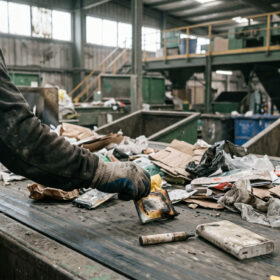
At this point it is important to know that batteries, accumulators and electronic devices taken out of use in the ordinary way, including e-cigarettes, must also always be collected separately from other waste. A battery or a device containing a battery that ends up in mixed municipal waste can be damaged and catch fire when the waste is compacted or processed, causing a fire in a waste collection truck or at a waste management site.
From the collection point, water-damaged devices go for processing in the same way as other e-waste: they are dismantled, and the metal, plastic and glass are separated and sent for recycling. Lead-acid batteries are processed in Estonia, while other batteries and accumulators are taken abroad for processing, for example to Finland, Poland, Latvia and Germany.
Find your nearest collection point for water-damaged devices
Water-damaged devices are accepted free of charge at waste stations and collection points all over Estonia, and small electronics without a battery also in shop collection boxes. You can easily find your nearest waste station or collection point on the interactive map, and all e-waste collection points are also gathered in one list. Handing in water-damaged devices is free both at a waste station and at a collection point, because the cost of processing is already included in the price of the product. After a flood, it is worth handing in water-damaged devices as soon as possible so that a damaged battery does not have time to catch fire at home.
- Small electronics – 13 surprising items that must not go into mixed municipal waste

- Battery fires caused 2.66 billion euros of damage to the EU waste sector
- Every battery gets a QR code in 2027, but only large batteries get a battery passport
- Liisu Miller shows in a video where to take old chargers and cables
- Water-damaged devices: what to do after a flood?
- A household danger that can start fires and fits in the palm of your hand